Professional Standards That Set Elite Aquatics Teams Apart
Anyone can put a lifeguard in a chair. What separates an elite aquatics team from an average one is what happens every minute after that — the standards a team holds when nobody is watching.
Rescue ready, every minute
On a professional deck, "on duty" means something specific. Every guard carries a rescue tube with chest strap, a whistle on a lanyard, a hip pack with gloves and a CPR mask, and a two-way radio. Polarized sunglasses and sun protection aren't perks — they're scanning equipment. A guard who can't see the bottom of the pool through glare can't protect it.
Elite teams call this being rescue ready: fully equipped, visibly identifiable, in position, and actively scanning — not sitting near the water, but working it.
Scanning is a skill, not a posture
Professional surveillance follows a documented zone-coverage protocol. Each station has a defined zone of protection, sized so the guard can scan all of it and reach any swimmer in distress fast. Zones overlap, and they get redrawn during the day as sun angle, glare, and crowd density change.
Guards rotate every 15 to 20 minutes between stands and roving positions — because scanning fatigue is real, and fresh eyes save lives. The rotation itself has standards: the incoming guard patrols the full zone before taking the stand, and the outgoing guard patrols it again before stepping away. There is never an unwatched moment in the handoff.
And when something looks wrong, elite teams train one rule: if you don't know, go. Enter the water and verify by contact. Never wait at the edge hoping to be sure.
Practice like it's real
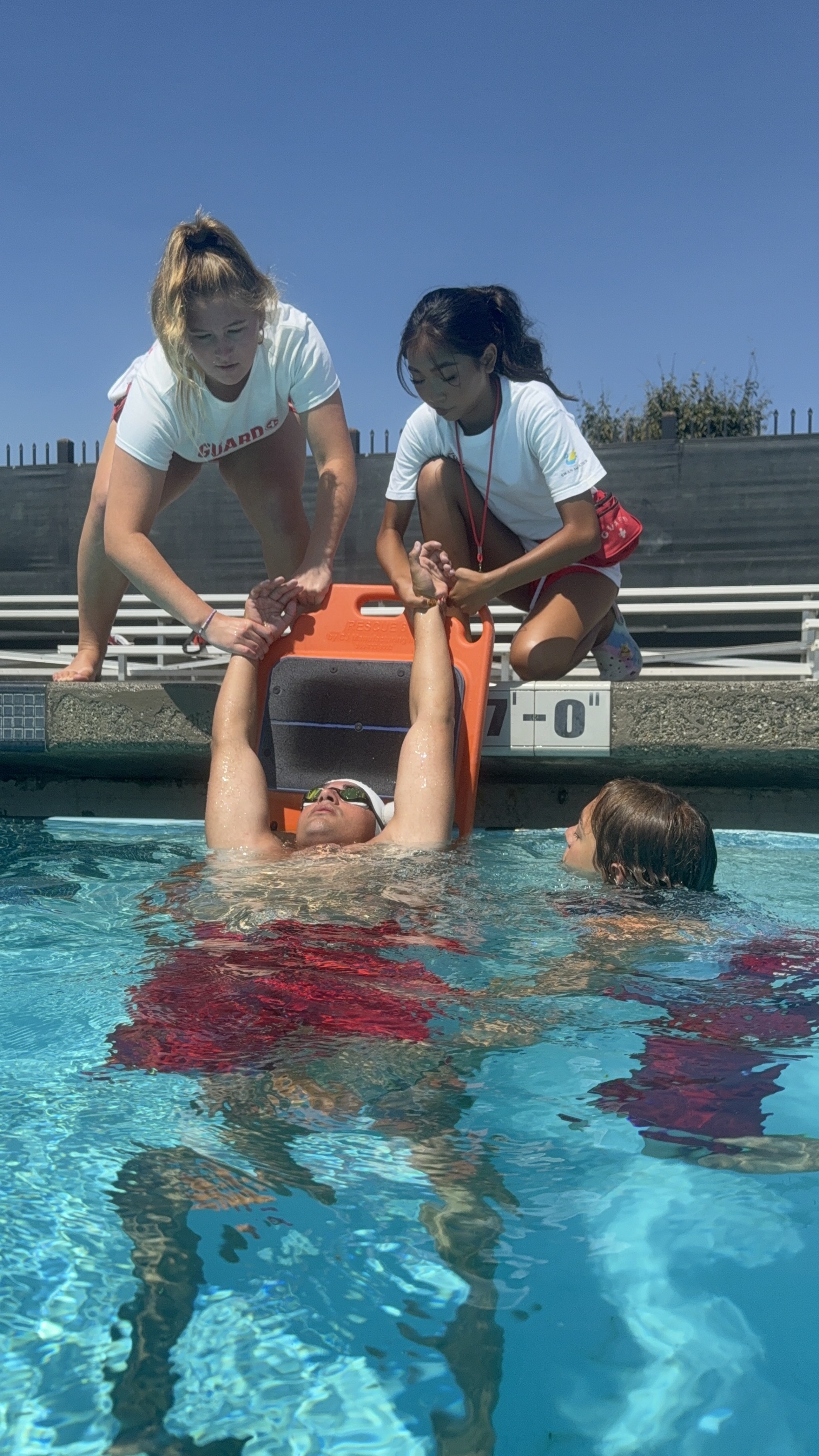
Certifications are the floor, not the ceiling. Professional teams drill weekly against pass/fail criteria — recognizing a victim within seconds, gloves on fast, activating the emergency action plan, executing the right rescue, delivering care. Monthly, the whole facility runs a full emergency scenario: a major water rescue, a missing-child lockdown, an evacuation with the clock running.
That cadence — a documented hour of in-service training for every 40 hours worked, with make-up sessions mandatory — is what keeps skills sharp in August, when the season is long and complacency is the biggest risk on the deck.
Professionalism your patrons can feel
Standards show up in small ways patrons notice: uniformed staff who greet families by name, rules enforced consistently and kindly, incident reports written the same day, a supervisor who walks the facility on a schedule instead of when something breaks. Elite operations document everything — daily equipment checks, slide inspections, near-misses reviewed weekly — because a safety culture you can't audit is a safety culture you can't trust.
The Swan standard
At Swan Aquatics, these aren't aspirations; they're the operating manual. Our facility teams run tiered staffing models, documented rotation and scanning protocols, weekly skill drills, and monthly emergency exercises across every property we manage. It's why cities and facility owners hand us their pools — and why families keep coming back to them.
Want to see what professional aquatics management looks like at your facility? Get in touch with our team — we'd love to talk.